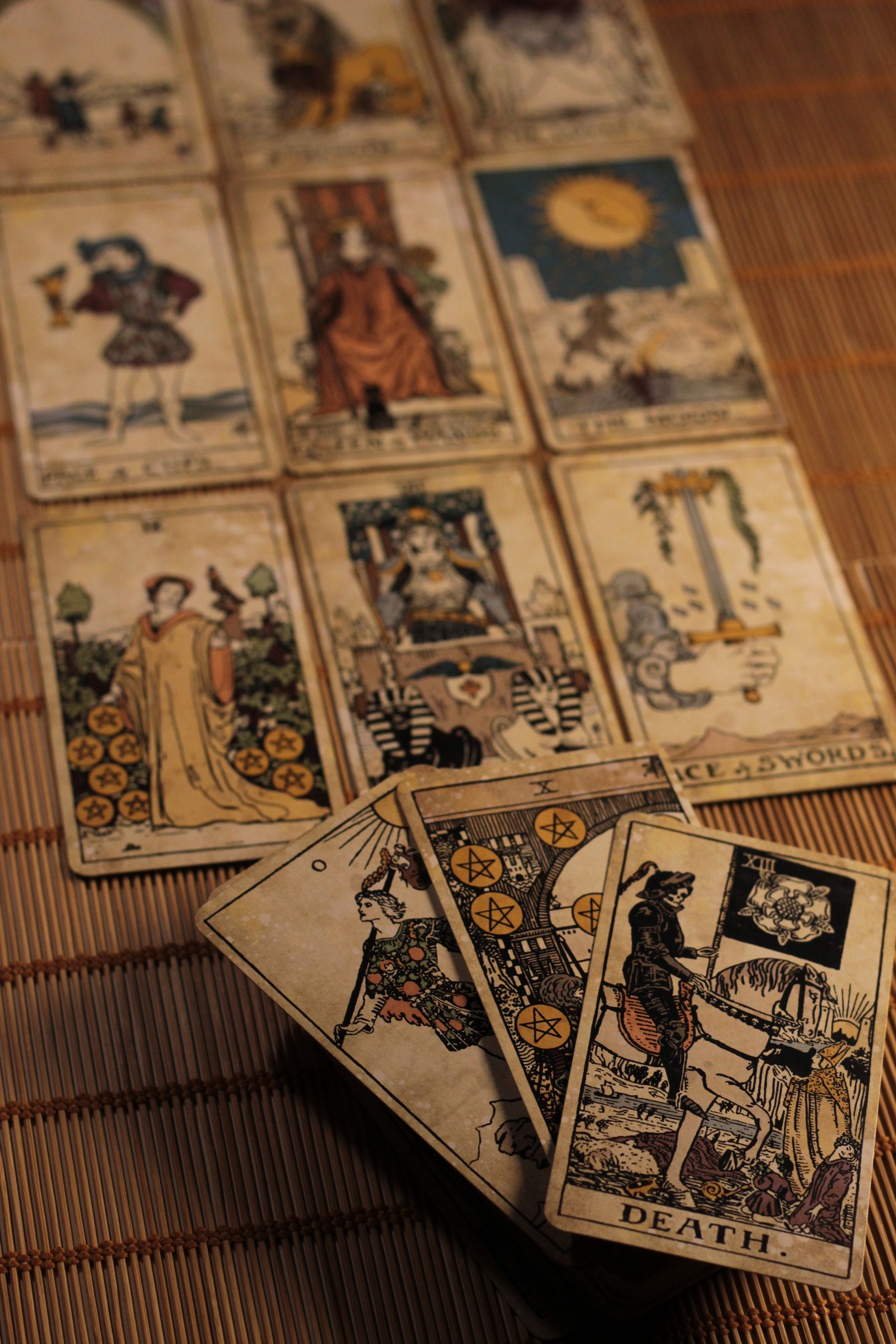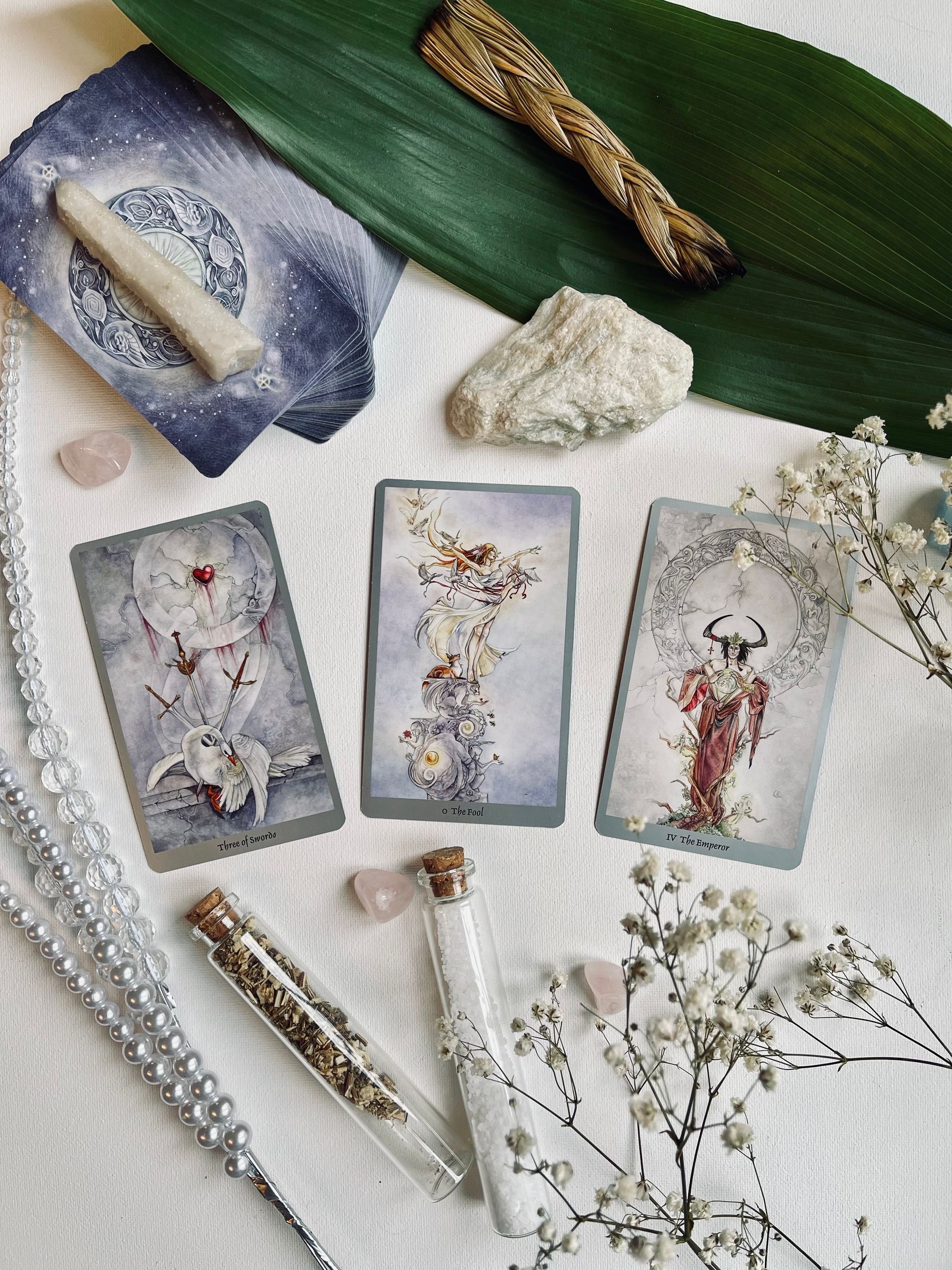
There is something profoundly counter-cultural about shuffling a deck of cards and asking the universe a question. In the age of predictive analytics and algorithmic certainty, the tarot does not promise answers — it offers mirrors.
The Empress sits on her throne of abundance, surrounded by wheat fields and running water. She is the archetype of creation, of the body’s intelligence, of the slow and cyclical nature of growth. She does not optimize. She does not scale. She blooms.
And perhaps that is exactly why, in 2026, more people are turning to tarot than ever before. Not because they believe in magic — though some do, and there is nothing wrong with that — but because the act of sitting with a question, without rushing to a solution, has become a radical act of self-care.
"The tarot does not tell you what will happen. It asks you what you are willing to see."
The Rise of the Ambiguity Economy
We live in what could be called the Ambiguity Economy. The old certainties — stable careers, predictable markets, linear paths — have dissolved. In their place, we have gig work, polyamory, portfolio careers, and a perpetual sense that the ground beneath us is shifting.
In this context, the tarot becomes a tool not for prediction, but for navigation. It does not tell you what will happen. It asks you what you are willing to see.
Every other interface in your life is designed to reduce ambiguity. Autocomplete finishes your sentence. A feed decides what deserves your attention. A model predicts, with unnerving accuracy, which of two headlines you will click. The tarot is the only piece of technology on your desk that deliberately increases the number of possible interpretations rather than narrowing them.
Reading as Ritual
The physical act of a tarot reading — the shuffling, the laying out of cards, the contemplation — is itself a form of meditation. In a world of infinite scroll, the tarot demands a different kind of attention: slow, embodied, present.
This is not about escapism. It is about engagement. The tarot reader does not check out of reality; they dive deeper into it, using the symbolic language of the cards to explore the layers of meaning that lie beneath the surface of everyday life.
There is a reason the ritual survives translation across five centuries and a dozen languages. The mechanics are almost insultingly simple: randomize, constrain, interpret. Randomness removes your ability to steer toward the answer you already wanted. The spread constrains interpretation to a fixed number of positions, each with an assigned meaning. What remains is the interpretive work — and that work is yours.
The mechanism most researchers point to is not divination but structured projection: an ambiguous symbolic prompt gives the reader permission to articulate something they already suspected. That is also why a reading feels most accurate when the question is honest.
What the Empress Knows
If the Fool is the beginning of the journey and the World is its completion, the Empress is the part nobody wants to sit through: gestation. Nothing visible is happening. Growth is real but unmeasurable. There is no dashboard for the third trimester of an idea.
Modern working life has no vocabulary for this stage. We have sprints and launches and quarterly reviews. We do not have a word for the six months in which a project is alive but not yet legible to anyone else. The Empress does. Her whole card is that word.
Both Things at Once
The interesting position is not belief or debunking. It is the willingness to hold two ideas simultaneously: that the cards have no supernatural knowledge of your life, and that a deliberate hour spent interpreting symbols about your life is genuinely useful. Most serious readers live comfortably in that contradiction.
The algorithm knows what you clicked. The Empress asks what you are growing. Only one of those questions requires you to answer honestly.
UNBO covers tarot as symbolic, cultural, and psychological practice. Nothing here is a prediction of future events, and nothing here substitutes for medical, legal, or financial advice.