In Salvador, you can buy the ingredients for a herbal bath at a market stall the same way you would buy onions. Bundles of leaves — arruda, guiné, alfazema, espada-de-são-jorge — sold by women who will tell you, without being asked, which combination is for cleansing and which is for opening paths.
The banho de ervas is one of the most widely practised rituals in Brazil and one of the least written about outside it.
Where the practice comes from
Herbal bathing in Brazil is inseparable from Candomblé and the wider Afro-Brazilian religious field, where leaves are not decorative but essential — the axiom kosi ewé, kosi òrìsà (“without leaves, there is no orixá”) states it directly. Each plant belongs to a deity, and the knowledge of which leaf serves which purpose is held by specialists and passed on through initiation, not through books.
Layered on top of that are Indigenous plant traditions and Portuguese folk Catholicism, which is why a bath prescribed in a terreiro and a bath your Catholic grandmother swears by can share an ingredient list while being explained in completely different terms.
"Without leaves, there is no orixá."
The two families of bath
Practitioners generally distinguish between baths that remove and baths that attract.
The banho de descarrego — the discharging or cleansing bath — is the more common. Its herbs tend to be bitter or sharply aromatic, and the water is poured from the neck down, deliberately excluding the head. The intent is to strip away accumulated heaviness: other people’s moods, a bad week, the residue of a hospital visit or a funeral.
The banho de atração or abre-caminhos bath uses sweet and floral material — rose petals, lavender, honey — and is about drawing something toward you rather than removing something from you.
The distinction is not aesthetic. Mixing the two categories carelessly is considered a beginner’s error precisely because the logic of the ritual is directional.
Baths tied to specific orixás belong to initiated religious contexts and are not generic wellness content. If a preparation is described as belonging to a deity or a house, that is a boundary, not a marketing detail.
How a bath is actually done
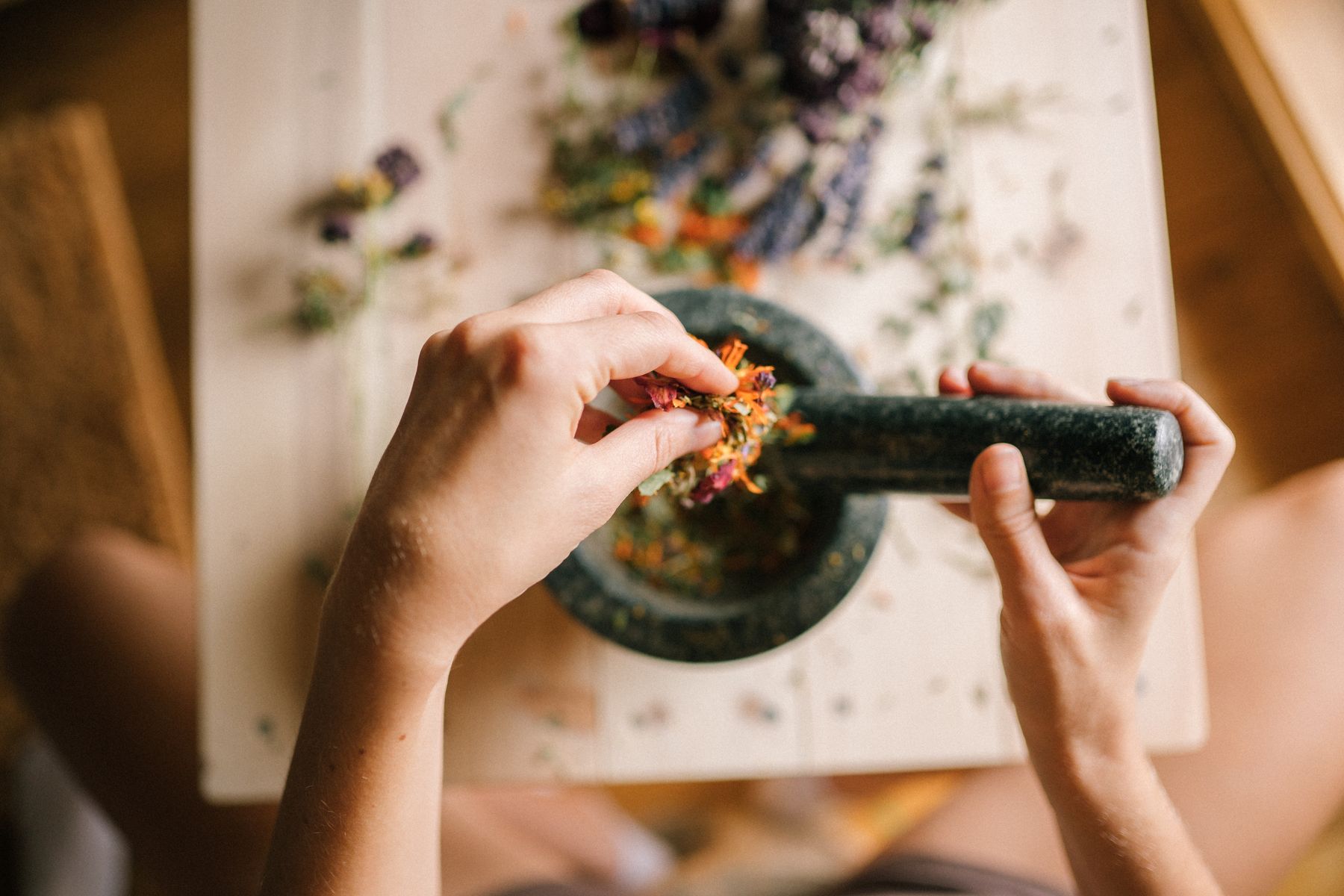
The standard domestic form is simple. Herbs are macerated by hand in cool or warm water — traditionally not boiled, since crushing the leaves is part of the act — then strained. The person washes normally first, because the bath is not for cleaning the body. The infusion is poured over the shoulders last, and in most traditions it is not rinsed off; you let it dry, often in silence, often before sleep.
Timing matters in practice: Fridays for many houses, the waning moon for cleansing work, sunset rather than midday.
Why it persists
There is an obvious physiological reading — warm water, aromatic volatile compounds, a deliberate interruption of the day, a period of enforced quiet. That reading is true and incomplete. What the banho provides that a shower does not is a defined beginning and end to a difficult period. You mark it. You pour it off. You do not carry it into tomorrow.
In a country with a long history of both institutional neglect and religious persecution, a healing practice you can perform yourself, at home, with leaves from a market, is not a quaint survival. It is infrastructure.
Written with respect for Candomblé, Umbanda, and Indigenous Brazilian traditions as living religions. Some herbs are irritant or toxic in contact or ingestion — never drink a bath preparation, and consult a qualified professional for any health concern.