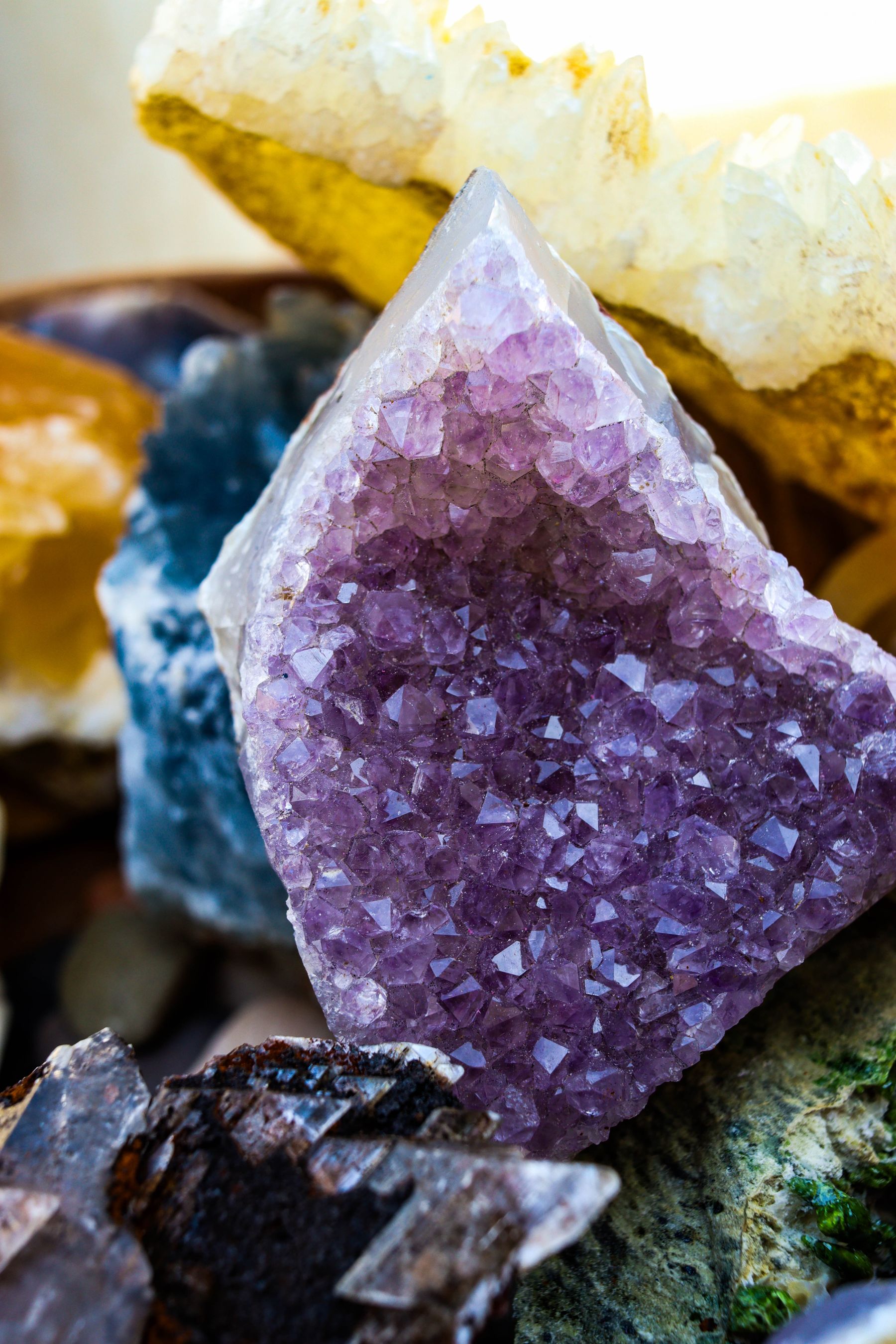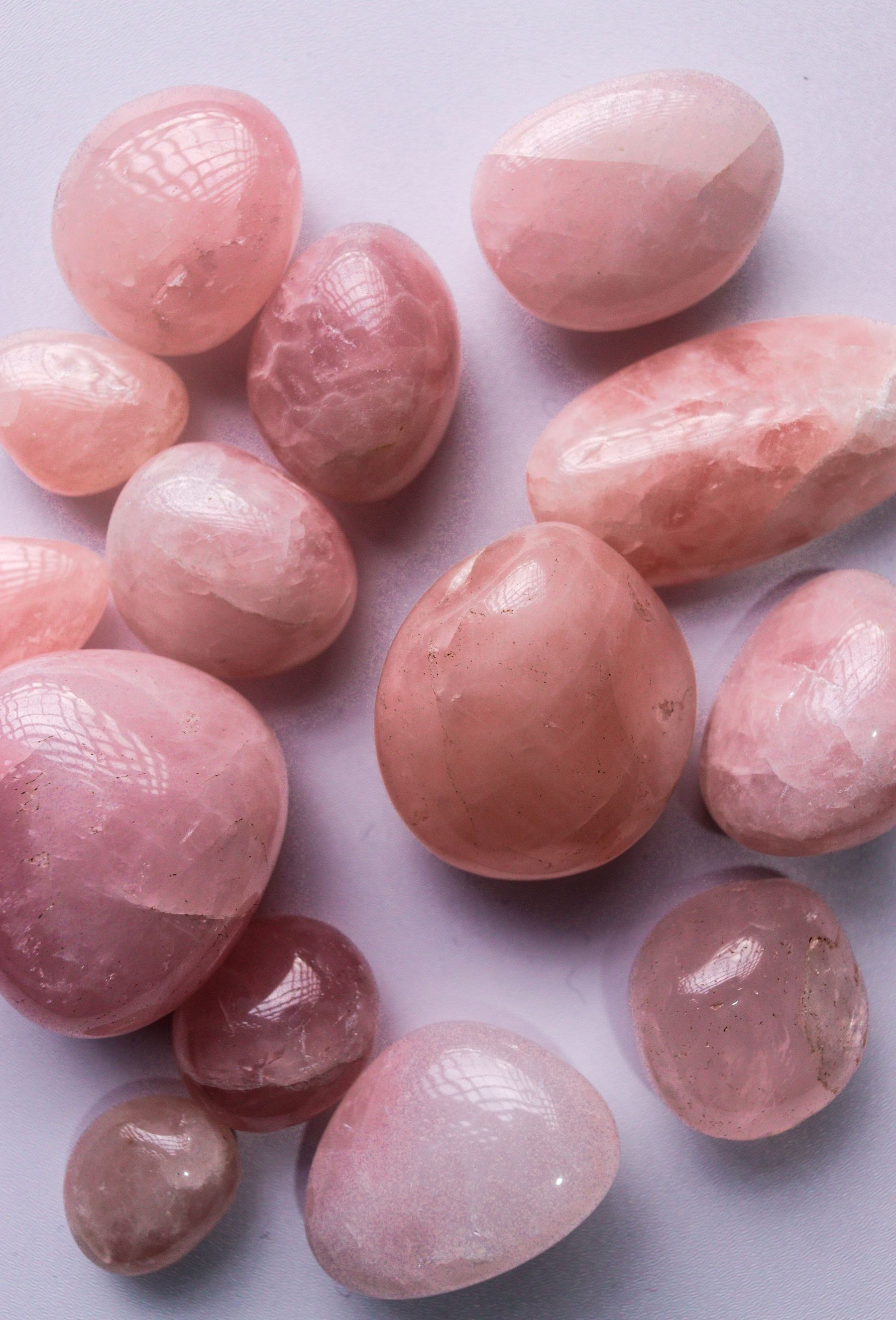
Rose quartz is the most photographed mineral on the internet and the most poorly explained. Somewhere between the geology textbook and the ring light, an ordinary silicate became a romantic appliance.
It is worth separating the three claims that get bundled together: what rose quartz is, what people have historically done with it, and what a pink stone on your nightstand can plausibly do for your relationships.
What it actually is
Rose quartz is silicon dioxide — the same compound as clear quartz, sand, and window glass. Its pink comes from microscopic inclusions, most convincingly identified as fibres of a borosilicate mineral in the dumortierite family. That is why the colour is usually cloudy rather than transparent: you are looking at millions of suspended fibres, not a dye.
It forms in pegmatites, the coarse-grained late stage of granite crystallization, which is also why it typically arrives in massive lumps rather than the tidy hexagonal points people expect from quartz. Well-formed rose quartz crystals exist but are genuinely rare; most of what you own is a fragment of a much larger vein.
Deep, uniform hot-pink "rose quartz" at a low price is usually dyed or is a different material entirely. Genuine rose quartz is pale, uneven, and translucent-to-cloudy — the flaws are the authentication.
The history is older than the aesthetic
Pink quartz beads appear in the archaeological record across Mesopotamia and the Mediterranean, and the stone has been carved for ornament for thousands of years. What it has rarely been, historically, is a love charm specifically. That association is largely twentieth-century, consolidated by the modern crystal-healing literature that assigned each stone a chakra and an emotional department.
This matters because “ancient tradition” is the most common claim made for rose quartz and the least supportable. The tradition of using it is ancient. The tradition of using it for romance is roughly as old as the paperback.
"The stone is not doing the work. The stone is holding your place while you do it."
What it plausibly does
Here is the honest version. A physical object placed deliberately in your environment functions as a cue. It marks intention, interrupts autopilot, and gives an abstract commitment a location. That is not nothing — it is the same mechanism behind wedding rings, worry stones, and the sticky note on your monitor.
If holding a piece of rose quartz makes you pause for ninety seconds before answering a message you would otherwise fire off angrily, the stone has measurably improved your love life. Not because of silicon dioxide. Because of the pause.
What it will not do
It will not make a specific person want you. It will not repair an incompatible relationship, and it will not substitute for the unglamorous work of saying difficult things clearly. Crystal culture’s least helpful habit is framing emotional labour as something that can be outsourced to a mineral, because that framing quietly implies failure is the stone’s fault.
Buy the stone because it is beautiful and because it came out of the earth looking like that. Keep it where you will see it. Then have the conversation.
Crystals are not medicine. Metaphysical properties described here are cultural and historical claims, not established science, and nothing in this article should replace professional medical or mental-health care.