The name gives it away. Amethystos — from the Greek a- (not) and methysko (to intoxicate). Literally: not-drunk. Of all the stones in the metaphysical catalogue, amethyst is the only one whose supposed function is embedded in its name in a language most of its buyers do not speak.
The Greek claim, stated plainly
Classical sources record the belief that amethyst protected the wearer from drunkenness, and that wine cups carved from or set with the stone would keep a drinker clear-headed. Pliny the Elder mentions the claim and is characteristically unimpressed by the magical explanation while still recording the practice.
There is a wonderfully mundane theory about why this belief was durable: a purple stone at the bottom of a cup makes water look like wine. A guest could appear to drink along with the table and stay sober. Whether or not that was the original mechanism, it is the most functional interpretation of a magical stone ever proposed.
"Not-drunk. It is the only stone in the catalogue that names its own job."
What it is geologically
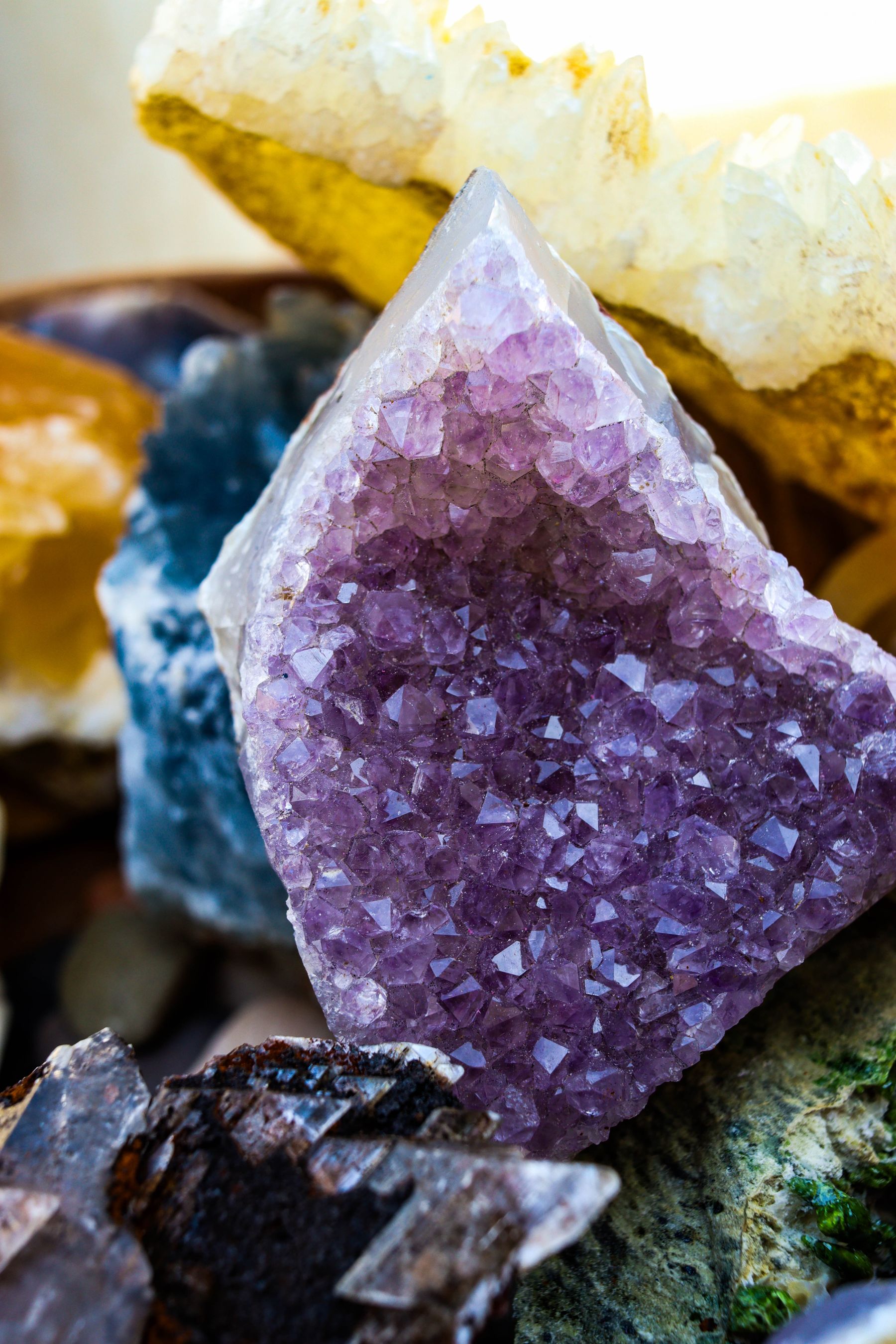
Amethyst is quartz coloured by iron impurities and natural irradiation, forming in volcanic cavities as the silica-rich fluids cool. Brazil is one of the world’s principal sources — the great geode deposits of Rio Grande do Sul have supplied global markets for over a century, and if you own an amethyst cathedral, there is a strong chance it was cut from Brazilian basalt.
Heat changes it. Amethyst heated sufficiently turns yellow-orange, which is how a substantial share of commercial “citrine” is produced. This is not usually disclosed at the point of sale.
Colour zoning — pale bands shading into deep violet toward the tip — is normal and indicates natural growth. Perfectly even, saturated colour throughout small stones often means synthetic or treated material.
Why recovery culture kept it
Walk into a recovery meeting’s book table or a sober-curious gift shop and amethyst is there, still doing the same job after two thousand years. Nobody involved believes the mineral metabolizes ethanol. What they use is the association: a token, carried, that names a commitment.
Recovery literature has always leaned on physical tokens — chips, medallions, keyrings marking intervals of sobriety. Amethyst slots into that tradition neatly because it predates it. The stone offers continuity with something older than the program.
The honest summary
The mechanism is memory, not chemistry. A stone in your pocket cannot stop you from drinking; being reminded, at the moment of decision, that you decided something already, sometimes can. The Greeks were wrong about why it worked and possibly right that it did.
Amethyst is not a treatment for alcohol use disorder or any other condition. If you are seeking support with substance use, contact a qualified healthcare provider or a recognized recovery organization.